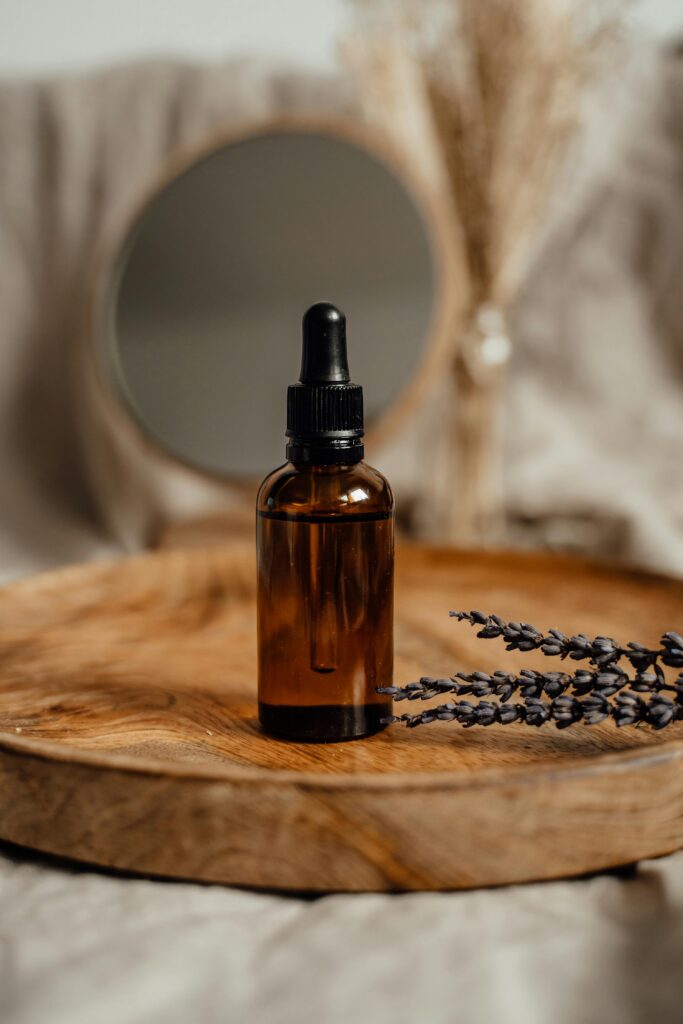
Vitamin C is an important nutrient for health. Human body can’t produce it and it is therefore necessary to receive from the food. As for the skin, apart the right nutritional regimen, the use of serums or creams will contribute to the skin’s needs and health. It is a water-soluble vitamin, sensitive to light, heat and oxygen.
As an ingredient in cosmetics, it is a powerful antioxidant that protects the skin from the free radicals. Free radicals (oxidative stress) break cells down. As we age, the ability of our body to fight free radicals is reduced. Moreover, external factors such as air pollution, smoking, alcohol, bad eating habits speed up their production.
In a long-term use, improves skin texture and appearance.
Stimulates collagen production from the fibroblasts, cells that reside in the dermis beneath the epidermis layer as well as the elastin synthesis. The number of fibroblasts reduce with the age and so does their activity. As a result, the skin loses its elasticity. Skin regeneration, also decreases. Vitamin C contributes to skin’s elasticity and tightening.
Brightens skin and helps to get an even skin tone, decreases hyperpigmentation. It actually inhibits tyrosinase, the enzyme responsible for melanin production.
Enhances the effectiveness of the sunscreen. Vitamin C can’t be used as a protection against sun damage, it only increases the efficacy of sunscreen.
Thus, vitamin C has many health benefits for the skin and it is always good to be part of a skincare routine.
Best results are obtained with concentrations between 10% and 20%. Higher concentrations will irritate the skin.
However, it isn’t always tolerated (because of the low pH) especially by people with sensitive skin. In that case, concentrations between 5% and 10% may be better tolerated. If not, you can always apply the vitamin C serum every other day till your skin gets used to it. Side effects of the intolerance could be skin irritation, redness and itching.
Active ingredients that vitamin C can be combined or not combined
Vitamin E (tocopherol), which is also an antioxidant. Their combination is very efficacious. They both provide protection against free radicals.
Ferulic acid, enhances the stability of Vitamin C (L-ascorbic acid is unstable due to light and heat).
Coenzyme Q10 (Ubiquinone), a great combo to fight free radicals, diminish signs of aging and boost the complexion of the skin.
Vitamin B3 (niacinamide), it is claimed that both ingredients can be used giving better results and providing skin benefits. However, you should wait after applying Vitamin C and before applying niacinamide to avoid skin irritation.
Retinol, avoid the use of the two active ingredients at the same skincare routine. Vitamin C has to be used in the morning to provide its benefits against free radicals and retinol has to be applied in the night. If you don’t use retinoids, you can apply vitamin C in the evening but you miss the enhancement that offers to sunscreen.
AHA’s, BHA’s it’s a big NO. Although their action is different and I read that they could be used if the skin tolerates them, for me is no. This combination could irritate your skin and harm your skin barrier.
Vitamin C is very unstable due to oxidation for the reasons I have already mentioned. It should be better stored it the fridge. If the color of the serum or cream is orange or brown, it should be discarded.
Vitamin C derivatives
When you decide to have vitamin C as part of your skincare routine, you should pay attention to the ingredients list. Should be named L-ascorbic acid or simply ascorbic acid.
As vitamin C is highly unstable, modifications were made by cosmetic brands to improve its stability. Those derivatives are not all equal. Moreover, derivatives have to be converted to L-ascorbic acid.
Let’s have a quick look at them
Tetrahexyldecyl Ascorbate (THDA), stable and oil-soluble, potent antioxidant that protects skin from free radicals. As an oil-soluble substance, has better ability to penetrate the skin. It has been shown to enhance collagen production. It is a promising derivative but further research should be done.
3-O-ethyl ascorbic acid, highly stable water and oil-soluble. Alleged to help skin brightening, firming, stimulating collagen production. Suitable for hyperpigmentation and even skin tone. However, it needs also to be converted to L-ascorbic acid. Still promising but further research needs to be done.
Ascorbyl Glycoside a water-soluble form combined with glucose. It is very stable, less irritating. It may help against free radicals and against hyperpigmentation. May contribute to skin brightening as well. However, its capacity to penetrate the skin and to convert into ascorbic acid, is not proven. Studies made in vitro (in the lab) proved that it can penetrate the human skin. However, more studies in vivo (on humans) need to be done. This is my post about a product with Ascorbyl Glycoside https://www.christiannak.com/?p=784
Ascorbyl tetraisopalmitate is an oil-soluble derivative which means that it can better penetrate the skin. It is a tyrosinase inhibitor as L-ascorbic acid which means that stops the melanin production and helps against hyperpigmentation. If you want to try a product with this derivative, you can read my related post https://www.christiannak.com/?p=2043
Magnesium ascorbyl phosphate, water soluble, more stable than the L-ascorbic acid but less effective.
Sodium ascorbyl phosphate, water-soluble, more stable than the others, works as an antioxidant but less than the ascorbic acid. Seems to be less effective in skin brightening (in vitro).
In conclusion, vitamin C is considered an essential ingredient in the skin care. It’s up to you to decide whether you want to use the pure Vitamin C or a derivative. If your skin can’t tolerate the L-ascorbic acid in high concentrations, choose a lower concentration or a derivative.
The most important is to maintain the health of your skin barrier and to avoid dehydrate or damage it. Always listen to your skin.
Special thanks to pexels.com for the free photos download as well as to the creator of this specific photo.
7 Replies to “VITAMIN C AND ITS DERIVATIVES”