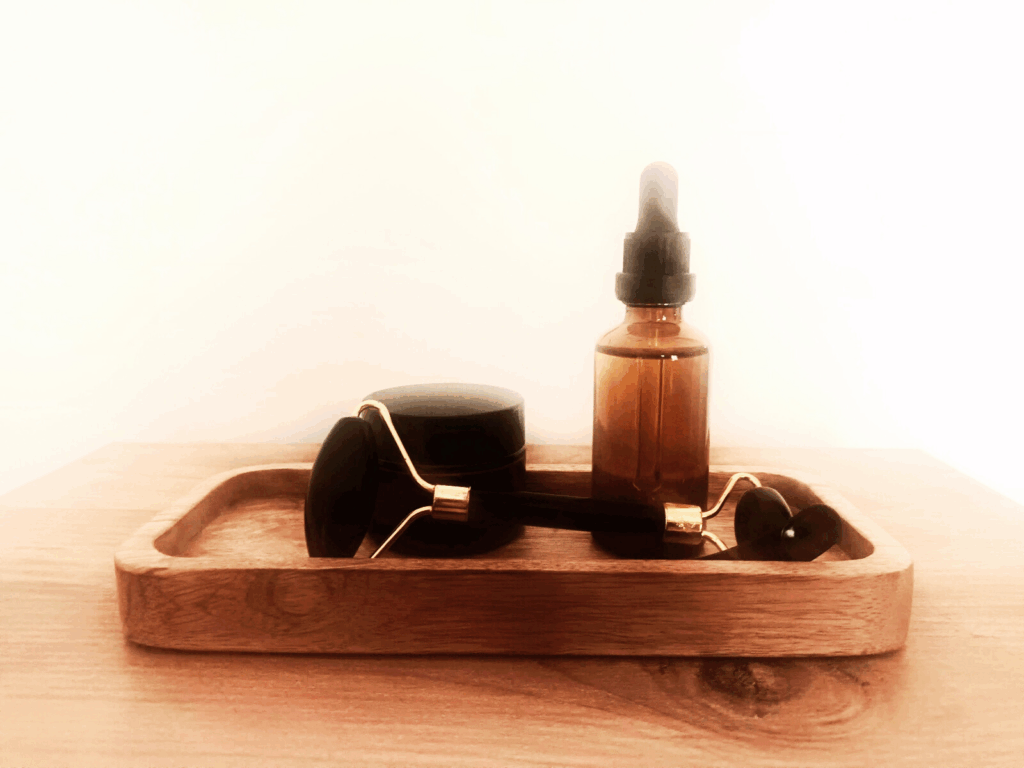
Oils are part of the formulas in skincare products offering many benefits due their ingredients and properties. The most popular are sweet almond oil, argan oil, rosehip oil, coconut oil, shea butter , safflower oil, avocado oil, cacao butter, and jojoba oil. Some oils can also be used in their pure form for face massage.
They generally act as emollients in skincare products to make the skin soft and smooth.
First of all, a couple of facts about the compounds of the oils:
Fatty acids contribute to the skin barrier health. They are naturally part of the lipid barrier of the skin. They protect the skin against external aggressors. They also have anti-inflammatory properties. Thus, their presence on the skin barrier is crucial. Moreover, they help retaining moisture. However, active substances in skincare products, especially those that exfoliate, strip the skin barrier of its natural oils.
Vitamin E, Tocopherol, is the active form of vitamin E. It is a potent antioxidant that moisturizes the skin as well. Strengthens the lipid barrier and protects against UV rays. It is an ingredient in sunscreens. Has also anti-aging properties to reduce the appearance of fine lines and wrinkles.
Phytosterols offer hydration and enhance the skin barrier. They have antioxidant action too.
Most common oils in skincare products
Sweet almond oil, comes from raw pressed almonds. Has moisturizing, nourishing and antioxidant properties. It is rich in omega-6 and omega-9 fatty acids, oleic in higher concentration, linolenic and palmitic acid. Contains also other fatty acids but in smaller amounts. Its antioxidant action, protection against free radicals, is due to the vitamin E (tocopherol). It is non-comedogenic.
Sunflower oil (Helianthus Annuus Seed Oil) is commonly used in skincare products. Rich in saturated fatty acids, palmitic and stearic and unsaturated, oleic and linoleic. Contains also Vitamin E (Tocopherol) Soothes and moisturizes skin and therefore protects and strengthens skin barrier. It is considered non-comedogenic.
Jojoba oil (Simmondsia Chinensis Seed Oil). It is actually a wax ester, fatty acid and fatty alcohol. The benefit of this particular oil is that it is similar to the skin sebum. Has an emollient action. Contains eicosenoic, erucic and oleic acid. Vitamin A and E, vitamins B, copper and zinc are part of its components as well. The comedogenic rating is 2 which means it is generally non-comedogenic.
Argan oil, extracted for the kernels of argan tree is rich in fatty acids such as oleic and linoleic. Has also polyphenols mainly tocopherols that have antioxidant properties. Some of the minor compounds are carotenoids, squalene and sterols. Considered as non-comedogenic which means that it will not clog the pores.
Shea butter (Butyrospermum parkii) is extracted from the nuts of the shea tree. It is an emollient and occlusive. Has also anti-inflammatory properties. It is rich in fatty acids mostly oleic and stearic. Other acids are palmitic, linoleic, arachidic and linolenic. Vitamins A, D, E and phytosterols are part of its compounds. It is widely used in skincare products. Non-comedogenic.
Safflower oil (Carthamus tinctorius seed oil) derives from the seeds of the safflower. Has big amounts of linoleic acid , oleic acid and smaller amounts of palmitic and stearic. Has antioxidant action due to the presence of vitamin E. It is overall considered as non-comedogenic.
Rosehip oil extracted of the wild roses seeds. Rich in fatty acids such as linoleic and linolenic acid. Contains also antioxidant substances such as tocopherols and carotenoids. Beta-carotene, a carotenoid, is actually a provitamin A. Has also vitamin E. It is a non-comedogenic oil that enhances skin hydration, makes skin smooth and soft as all emollients generally do.
Cocoa butter (Theobroma cacao seed butter) has several fatty acids. The main component is a triglyceride, consisting of palmitic, stearic and oleic acid. It is solid at room temperature. It is used in body products. Has moisturizing and nourishing properties but it is comedogenic which means that it shouldn’t be used as an emollient for the face. The comedogenic rate is 4 in the scale from 0 to 5.
Coconut oil contains saturated fats such as lauric acid, myristic, palmitic and caprylic acid. Has small amounts of Vitamin E. It is comedogenic with a rate 4 in the scale from 0 to 5.
Grapeseed oil (Vitis Vinifera Seed Oil) is rich in vitamin E. Main fatty acids are linoleic, oleic, palmitic and stearic in smaller amounts. Has also phytosterols. It is moisturizing and alleged to stimulate collagen production. It is non-comedogenic.
Avocado (Persea Gratissima) oil with oleic acid as the main fatty acid, palmitic and stearic. It is also a source of vitamins E and A. Other antioxidants are the phytosterols. Provides hydration, nourishment and antioxidant action. It is a non-comedogenic emollient, ideal for dry or very dry skin.
Castor oil consists of ricinoleic, oleic and linoleic acid. Contains also triglycerides and vitamin E. It has moisturizing and anti-inflammatory properties due to the ricinoleic acid. It is alleged that it can boost hair growth but this seems to be more a subjective evidence. The fact is that there are no scientific datas to support this theory. It has a low comedogenic rate.
Macadamia (Macadamia Ternifolia Seed) oil is extracted from the kernels of the macadamia nut. It is rich in fatty acids mostly palmitoleic and vitamin E. Has nourishing and moisturizing properties and it is used in hair care products too. It is non-comedogenic.
Cold-pressed oils have higher nutritional value for the skin because of their extraction method. They are well-tolerated and gentle to the skin. However, if you want to apply an oil in its pure form to your skin, you should first do a patch test if it is your first time.