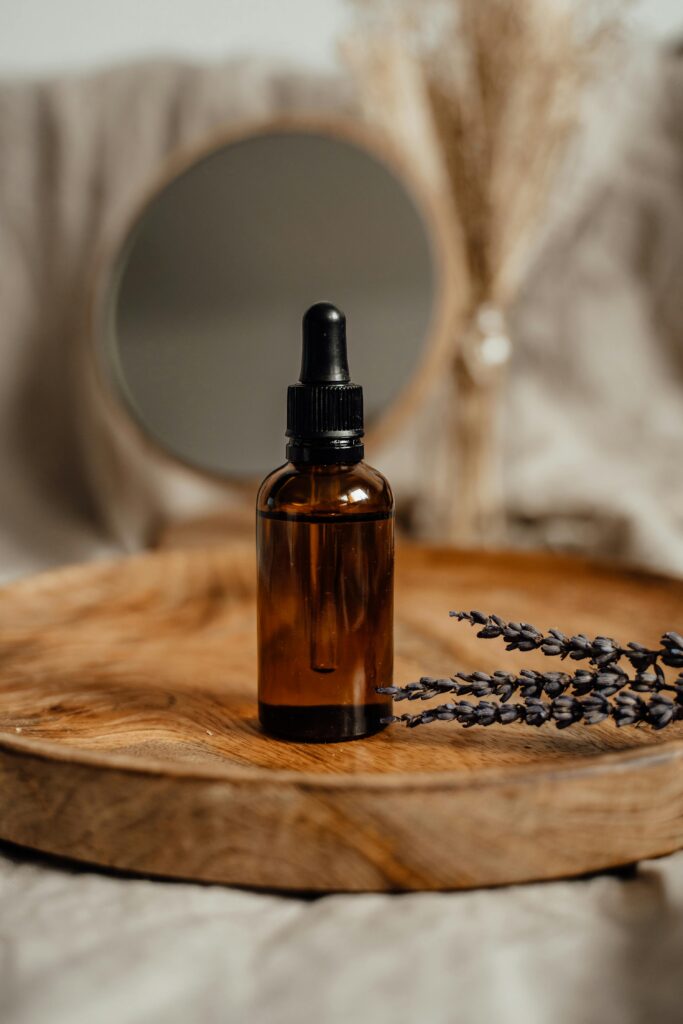
Niacinamide is a type of Vitamin B3 and belongs to the B complex vitamins. It is widely used in beauty products.
This vitamin offers many benefits to the skin as long as it is used in the right concentration according to your skin type.
Has anti-aging action. Stimulates collagen production which means fewer fine lines and wrinkles. This can be achieved with concentration 4-5% of the vitamin.
Acts against acne. It is the ingredient that in oily skin or skin with imperfections helps regulate sebum production and leads to less enlarged pores. Regulating sebum is essential in preventing acne flare-ups and at the same time leads to a more even skin tone.
Has anti-inflammatory effects on the skin and reduces redness, acne and eczema.
Acts against hyperpigmentation and makes the skin brighter. Helps lightening dark spots. Niacinamide doesn’t inhibit the tyrosinase action and therefore, the production of melanin. It prevents the transfer of melanosomes to keratinocytes. That being said, it can give better results when used in combination with other brightening agents.
Protects from the free radicals the cause of oxidative stress (antioxidant).
It doesn’t cause sun sensitivity. On the contrary, it is advised to be applied before the sunscreen. Can be used once or twice a day.
It is generally well tolerated. However, cases of itchiness, redness, a slight burning sensation and allergic reactions have been observed, especially at higher concentrations. It is advisable to do a patch test before use. This rule applies to any new ingredient or product that you introduce into your skincare.
Concentrations of 5% or 10% give better results. A concentration of around 5% or lower is considered best for sensitive skin or when using it for the first time. Such concentrations are effective to reduce hyperpigmentation and give the skin a more even tone. You may also consider to combine other brightening substances. It is often combined with Zinc in a formula of Niacinamide 10% +Zinc for acne prone skins. Zinc has antibacterial properties. Acts also against inflammation. Higher concentrations of 10% give better results for oily skin.
If it is your first time to use niacinamide, it is advised to start with a 5% and once you feel that your skin tolerates it you can proceed to 10% if needed.
Niacinamide can be combined with
Hyaluronic acid
Retinol
The opinions about the use of niacinamide with acidic substances are controversial.
To the question whether you can apply your niacinamide and vitamin C serums in the same skincare routine, I would say you can use the L-ascorbic acid serum in the morning and the niacinamide in the night routine.
You should generally avoid using niacinamide with AHA’s and BHA’s to avoid inflammation otherwise leave a time space between them. Niacinamide works better at a pH around 6.
I believe that a more cautious approach to the use of active ingredients is preferable and will eventually offer better results. Start with a lower concentration of niacinamide to give time to your skin to adjust and gradually increase. The first days of use be very cautious with the other active products that you use in order to see your skin’s reaction. Your target is to improve your skins appearance not to harm your skin barrier. Positive effects will come sooner or later.
You should never skip the use of sunscreen with a high sun protection factor (SPF) as well as the good hydration.
Special thanks to pexels.com for the free photos download as well as to the creator of this specific photo.
3 Replies to “THE BENEFITS OF NIACINAMIDE IN SKINCARE”