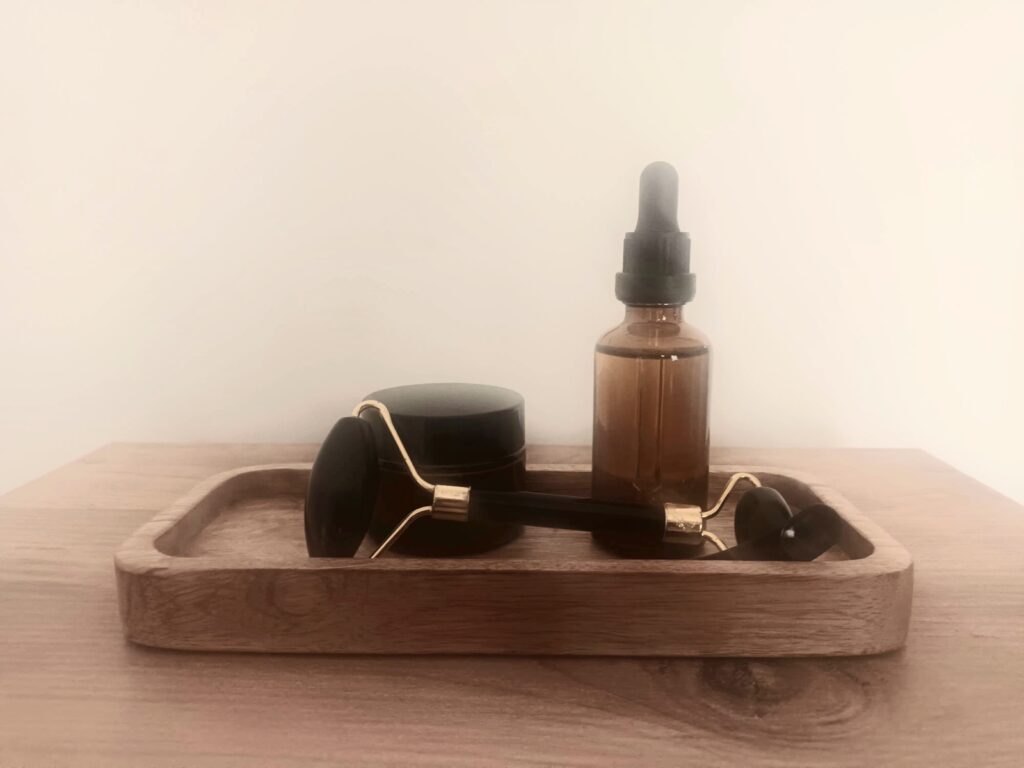
Several studies have been made and evaluated over the years concerning the action of alpha-arbutin.
It is used to treat dark spots and hyperpigmentation.
A-Arbutin is a glycosylated hydroquinone (hydroquinone with the α-anomer of D-glucose) which is used in the cosmetics industry for skin whitening, against dark spots and as an alternative to hydroquinone.
The hydroquinone, although effective, has also significant side effects such as dryness, itching, skin irritation, permanent skin discoloration and photosensitivity (to sunlight).
Melanocytes in the skin produce melanin with the help of the enzyme tyrosinase. A-arbutin inhibits the action of tyrosinase and therefore inhibits melanin production, improves the appearance of age spots and acne scars, evens skin tone, reduces dark spots and hyperpigmentation.
Can be combined with
Niacinamide to decrease acne scars. You can apply the niacinamide serum first and then the a-arbutin serum unless your serum contains both ingredients.
Vitamin C (L-ascorbic acid), which is an antioxidant and a tyrosinase inhibitor. You may therefore achieve a reduction of dark spots and get the benefits of the action of vitamin C. If you feel that the vitamin C dehydrates your skin, just use the alpha-arbutin with the niacinamide.
AHAs and BHAs, that cause superficial exfoliation and can thus help the skin absorb a-arbutin better. However, it would be a good idea to be careful regarding the concentration of hydroxy-acids and the frequency of their use. You should try to avoid irritation and hypersensitivity of the skin. Moreover, I would say that you shouldn’t overdo with the use of potent ingredients.
It would be better to use them at a different skincare routine. If you decide to use both ingredients and it is your first time, it is advisable to avoid it. Try one ingredient first and once your skin gets used to it, you can proceed to the use of the second one. Always moisturize your skin well and use sunblock.
Kojic Acid, the two ingredients can accelerate the reduction of dark spots and you can therefore get a brighter skin.
Possible side effects
The use of alpha-arbutin may have its downsides. You may have mild skin irritation, redness, acne due to skin irritation, the skin sensitive to sunlight which may lead to sunburn.
Does it have permanent results?
The benefits are not permanent. The results last as long as it is used to inhibit the enzyme tyrosinase. If you stop using it, the positive results will slowly start to fade. Arbutin does not destroy melanin, it simply inhibits its production.Thus, sunscreen with a high protection factor is essential.
How long can I use α-arbutin?
It can be used for longer periods of time, always according to the instructions of the cosmetic brand.
Can hydroquinone be produced from α-arbutin in the skin?
A-arbutin has been studied for years. However, no one can give a clear answer to the question. It is said that it depends on the storage conditions. In addition, it could be produced by microorganisms in the skin and by sunlight. However, it is believed that it doesn’t have the same side effects as hydroquinone.
Can it be used with retinoids?
The answer is definitely no. Combining them could cause irritation and make the skin more sensitive. So, it is best to use them at different times of the day.
To sum up, alpha-arbutin is a depigmenting and brightening agent. Can offer significant benefits especially when combined with other substances with similar action. In case that your skin shows signs of irritation, re-evaluate your skincare routine. Under no circumstances should you cause damage to your skin barrier. In case of doubt, consult a dermatologist.
One Reply to “FACTS ABOUT THE ALPHA-ARBUTIN IN SKINCARE”