Silicones are polymers that have been used in hair care products since the 1950s. Their use may have benefits but it has its downsides too. They are not dangerous to humans but are considered harmful to the environment. They accumulate in water resources and do not degrade.
What do they offer?
Help detangle hair and make it easier to comb or brush
Can reduce frizz by preventing moisture to enter
Make hair soft, smooth and easy-to style
Add volume
Make hair shiny
Silicones in heat protectants form a protective barrier between hair and heat. They are not affected by the heat and they don’t transfer heat.
The most common silicones used in hair products are:
Dimethicone (polydimethylsiloxane, PDMS)
Cyclopentasiloxane
Cetyl Dimethicone
Amodimethicone, a derivative of dimethicone
Dimethiconol
Cyclomethicone
Different types of silicones
Non -water soluble silicones, although they bring shine to the hair, their use has its drawbacks
Accumulation on the scalp because they can’t be easily removed with water. They create a film on the hair which prevents hydration and nourishment from other hair care products (which also contain silicone) and the hair becomes dry and frizzy over time. The roots may be oilier. This leads to more frequent washing, which in turn dehydrates the hair. Although initially hair has shine, over time it becomes dull. Moreover, they will eventually lead to weak and brittle hair. Lack of hydration leads to less elasticity.
Hair becomes heavy, curls lose their shape.
Can clog the pores. If the scalp pores are clogged, hair does not easily grow.
Also, clogged pores could lead to irritation and itching on the scalp.
Water-soluble silicones, can be eliminated with water and you don’t need clarifying shampoos or strong surfactants.
Volatile silicones, evaporate after use and don’t accumulate on the hair (no build-up). Consequently, they don’t cause damage.
What you can do:
Use a clarifying shampoo from times to times or shampoo with strong surfactants. However, this will dry your hair out. Clarifying shampoos dehydrate the strands of the hair. You shouldn’t use such a shampoo frequently.
Choose hair care products that contain water-soluble silicones.
Switch to silicone free hair care products.
If you want to know what silicones are in your hair care products, look at the ingredient list. The endings will be –cone, -conol, silane or siloxane. If you see the prefix –PEG, it means that it is water-soluble.
If you decide to switch to silicone-free products, it will take time for your hair to adjust until all the buildup is removed. Patience is required and your hair will recover over time and will thank you. I ‘m not trying to discourage anyone from using silicone products. I’m just listing the pros and cons of using them.
The bottom line: Silicones in hair care products deliver several benefits but they also have their downsides. It is up to you to decide whether you want to use products with silicones or not. All you have to do is to consider if the advantages outweigh the disadvantages.
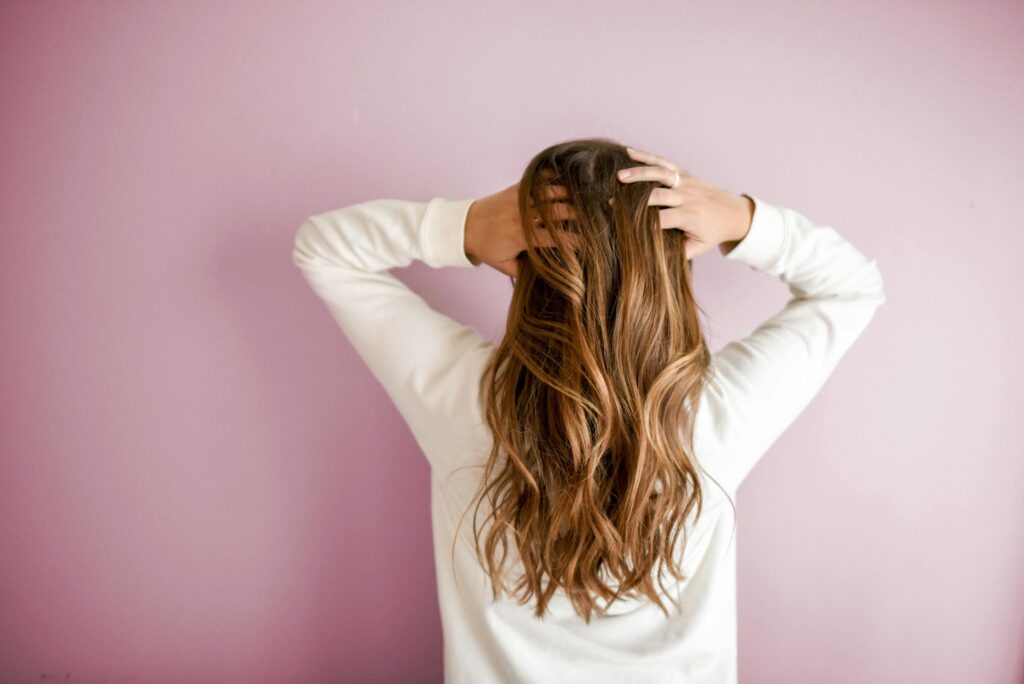
Special thanks to pexels.com for the free photos download as well as to the creator of this specific photo.
One Reply to “ARE SILICONES GOOD OR BAD FOR YOUR HAIR?”